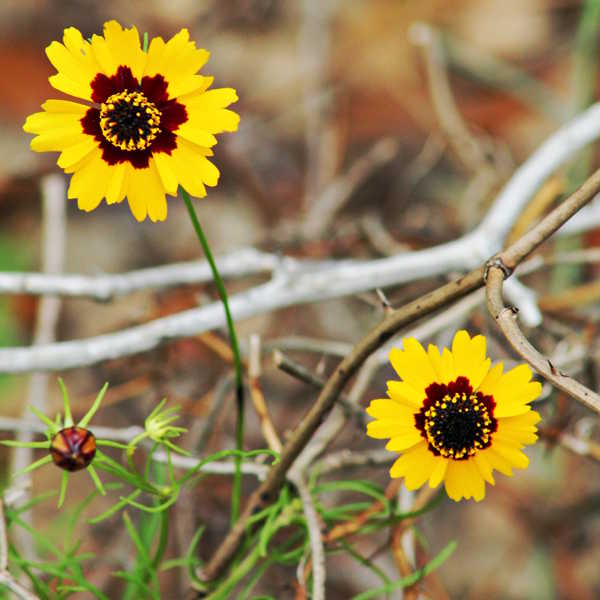
Many of the flowering plants we use in our gardens and landscapes were wildflowers before they were brought under cultivation. In this post, Coreopsis and Rudbeckia are two genera in the daisy family (Asteraceae) that have species that gardeners and plant breeders have used to produce new colors and shapes of flowers to beautify our flower beds and landscapes.
Coreopsis grandiflora is the Largeflower Tickseed. In its wild form, all the petals on this large flowered plant are yellow as seen here.
The Coreopsis I have found in the Fort Worth area, as pictured above, were the Golden Tickseed or Plains Coreopsis, Coreopsis tinctoria.
Notice here, that the flowers possess a maroon color spot on the base of each petal and their flowers are about 2 inches in diameter.

Here we see, Coreopsis grandiflora ‘SunKiss’ by PanAmerican Seed. This variety has flowers that appear to be a larger version of the Coreopsis tinctoria above. Note that the maroon spots are similar in color but the indentations on the tips of the petals appears more pronounced. Remember that the normal C. grandiflora is all yellow, and a more buttery yellow than what you see here.
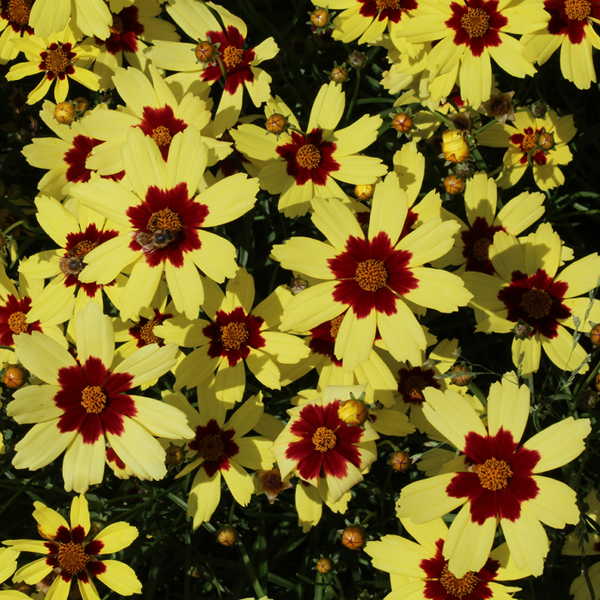
Coreopsis grandiflora ‘Electric Sunshine’ is the plant seen in this image. This variety was produced by Darwin Perennials and appears to be a more buttery yellow than ‘SunKiss’. Both of these varieties bloom spring, summer, and late summer and would make colorful additions to any planting.
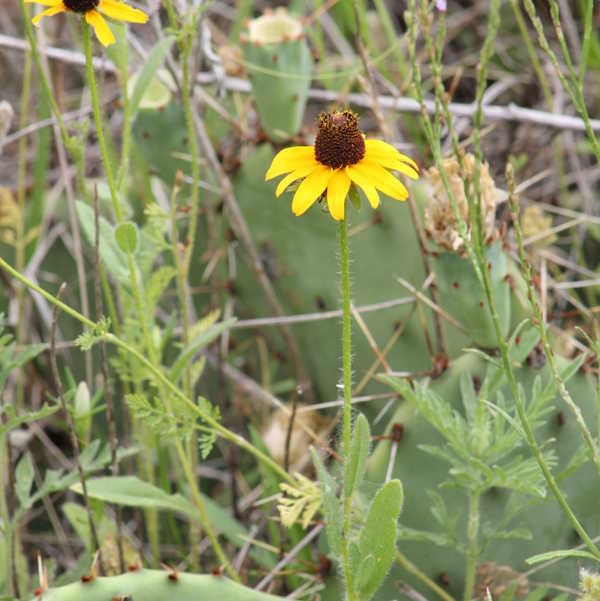
Rudbeckia hirta is commonly known as the Black-eyed Susan. This member of the Daisy family (Asteraceae) is found throughout the US and Canada. Seen here is a 2 inch diameter, all yellow petaled version.
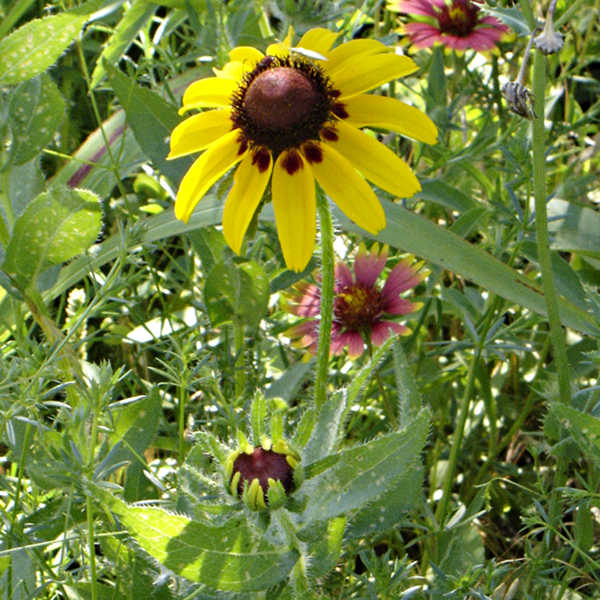
This specimen of R. hirta makes slightly larger flowers, about 3 inches in diameter, and has maroon spots on the petal bases.
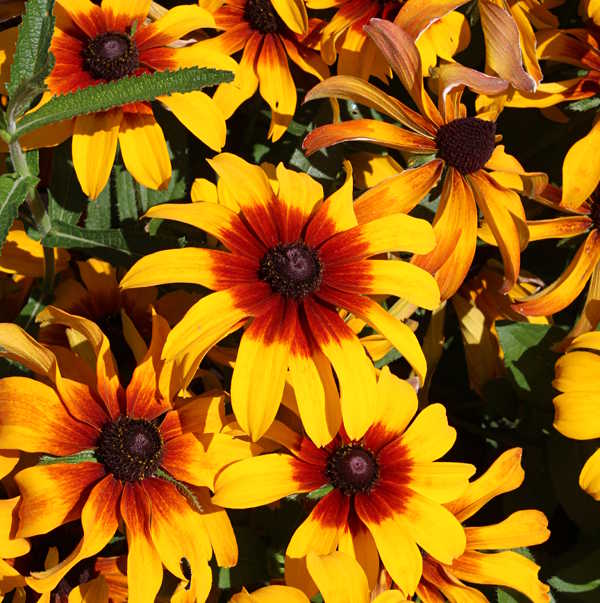
Here we see Rudbeckia hirta ‘Rising Sun AS Chestnut Gold’. This variety of R. hirta has 4 inch or larger flowers with a large maroon petal base. Just to the right of the flower in the image center is the chestnut gold version of the petals. Apparently, this variety produces the maroon based, golden petals which mature into chestnut colored petals. These are strikingly beautiful and give a planting with a range of color schemes. You can see what else Green Fuse is up to here.
Leave a Reply