I was out in West Texas close to home in early May 2018, and I was looking for wildflowers to photograph when I came across two species of daisies I haven’t seen before. Both of these plants are members of the Daisy Family(Asteraceae) which are typified by compound flowers made of a central disk surrounded by petals. The two species I found on this trip lack ray flowers which means their flowers lack the petals around the perimeter of the central disk making them appear to be something other than a typical daisy.

The first flower is Hopi Tea Greenthread (Thelesperma megapotamicum).
This plant is fairly large as Thelesperma go and I thought, originally, that this was some well-fed version of Thelsperma filifolium which also occurs in this area. However, closer examination of the flowers shows the disk florets are all that this species produces.

Above is an example of Thelesperma filifolium known as Greenthread. You can compare it to T. megapotamicum and see they are kinfolk. Note the bracts beneath the closed flowers and the way they “nod” in both species. Also, T. filifolium has the pretty ray florets that form the petals and the typical “daisy” flower plan we are all familiar with.
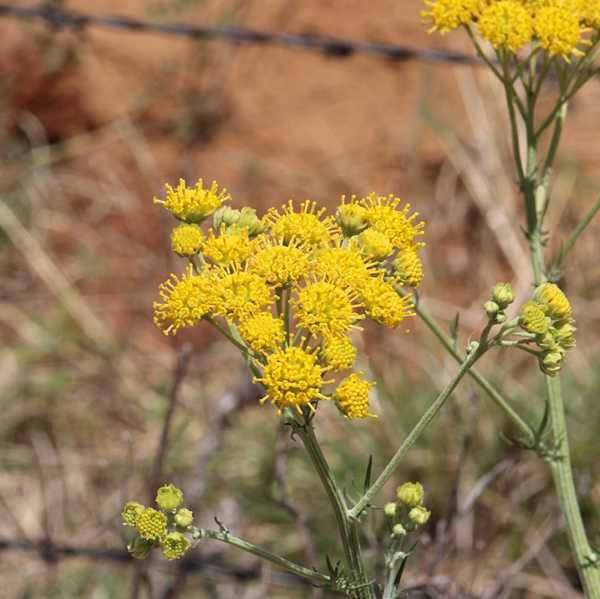
The next weird daisy is Hymenopappus filifolius cinereus also known as Fineleaf Woolly White. Again, we have an atypical flower lacking any ray florets to match our daisy expectation. The disk flowers of this species can be yellow or white. The projections above the surface of the flower head visible in this image are the ends of the pistils of each floret in the compound flower head. Like Hopi Tea Greenthread, this species produces large (3 or more feet tall) robust plants under the right conditions.
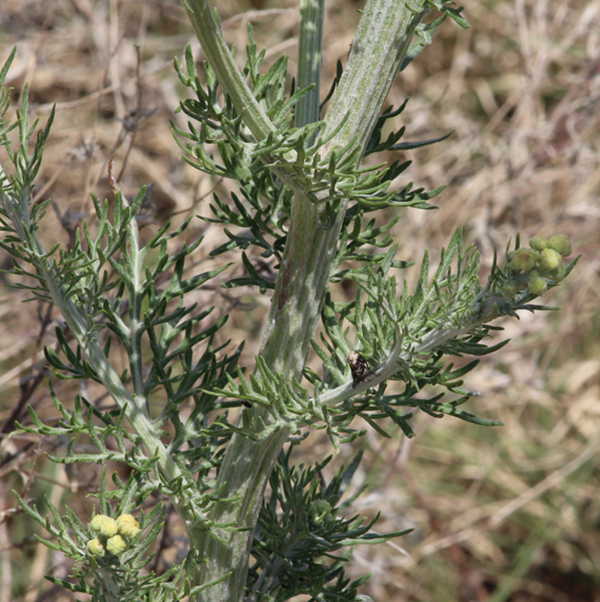
This last image shows the “woolly white” fuzziness on the stems for which these plants are named. Also, note the deep lobing of the leaves on this plant which is a helpful identifying characteristic.
Leave a Reply