Sometimes when you are outdoors looking for things to photograph, you come upon something left behind by an animal that makes you wonder what creature was there. In this set of photos you will see the signs of activity by the North American Porcupine, Erethizon dorsatum.

In the first image you see a young specimen of Ulmus crassifolia, also known as the cedar elm tree. Visible on this tree are places where the bark has been stripped away down to the white wood underneath. In some parts of Texas, you can see activity like this on small branches and twigs due to the activity of rats. Obviously, something larger has been busy here.
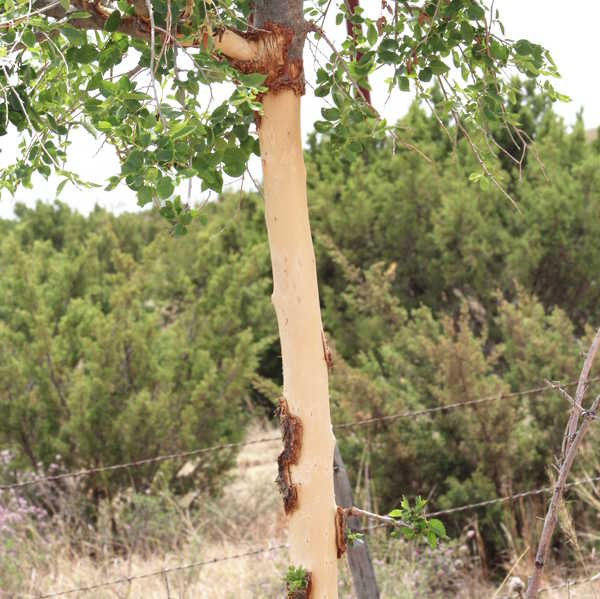
In this image, another young tree has been nearly stripped of bark along its trunk.
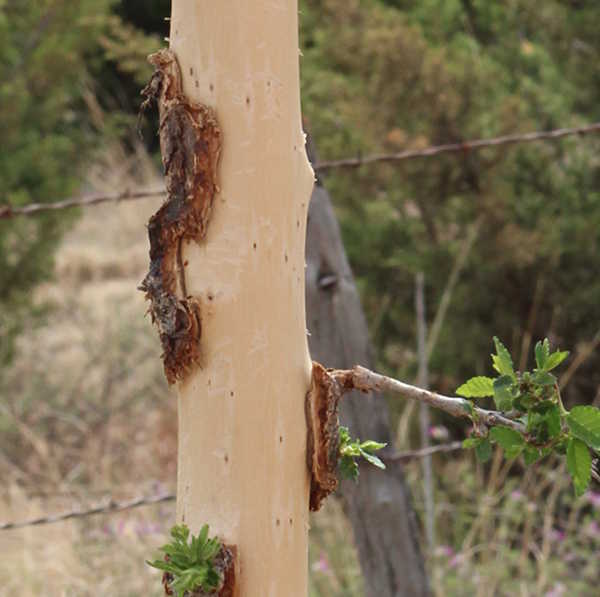
Closer inspection of the trunk shows places where large teeth have been at work and have scored the trunk. Porcupines range into western Texas where they feed on various kinds of herbaceous plants during the year. They will also eat the inner bark of some types of trees. From the looks of the trees in these photos, they enjoy young cedar elm bark considerably.
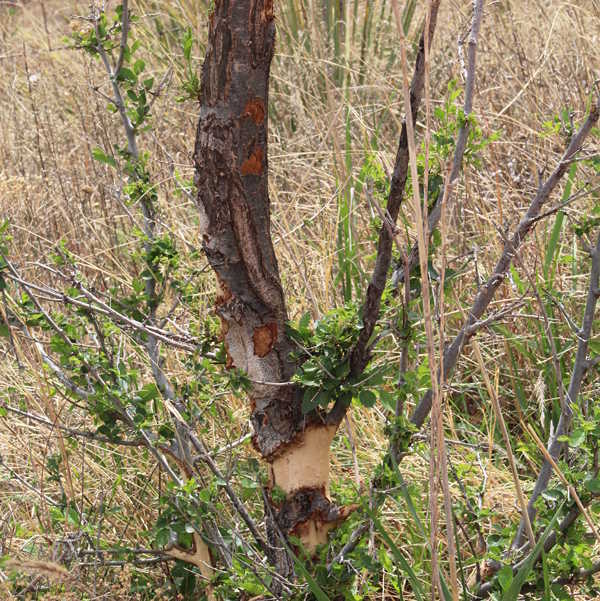
In this last image, you can see where the porcupine was able to feed close to the ground and avoid having to climb for his dinner. Porcupines are largely nocturnal, but they can be seen about in the daytime. I have yet to encounter a live one of these large rodents and I am looking forward to seeing one peeling tree bark one of these days.
Leave a Reply