
On a recent visit to Rocky Mountain National Park, I was able to photograph some of the plant and animal life that live in the alpine tundra ecosystem at the Forest Canyon Overlook, elevation: 11,716 feet. This is a little less than 2 and a quarter miles above sea level. How’s that for really, really high?
In this first image you see the glacial moraine that forms the wall of the Forest Canyon, a valley shaped by ancient glaciers. The rocks visible here were dropped by the glacier and were the pieces it used to abrade the walls and floor of the valley to produce what you see today.

This image shows the alpine tundra that exists above the treeline, in fact, tundra means land without trees. The wind and weather here is too extreme for tree growth and the grasses and other plants which live here are able to withstand the wind, cold and short growing season.

Here is a Dandelion, Taraxacum officinale. It is hugging the ground and is somewhat protected by the surrounding stones. I suspect the stones help shield it from the windy conditions and they absorb sunlight which may help warm the dandelion’s space.

Here is a Halictid bee on another dandelion. I was a little more than surprised to see insects and flowers at this altitude because grasses don’t need pollinators. My respect for the toughness of this kind of bee and for the dandelion has increased.

This image shows a Common Yarrow (Achillea millefolium). This is a new species for me. I love going places and discovering things I have never seen. It is one of the benefits of travel to exotic places and a blessing of the national park system. The leaves on this plant are very feathery, fern-like. Took me a good while to identify this plant and you can read more about these rascals here, here and here.
You would never guess this plant is kin to a sunflower but they both belong to the Daisy family: Asteraceae.

In this image, you can see my foot. This is generally a no-no for photographers, but I included it to give you some idea of the size of the Red Turnip Beetle (Entomoscelis americana, family:Chrysomelidae) that I spotted while tromping along the trail at the Forest Canyon Overlook. Most folks were zipping along the trail to see the canyon and to soak up the scenic mountains, as for me, I tend to keep my eyes peeled for interesting things to photograph.
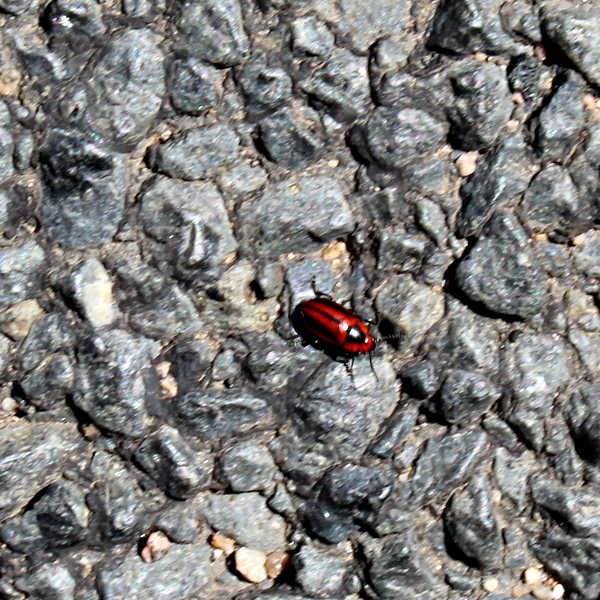
In this last image, you can see a somewhat blurry image of this tiny little fellow. His coloration is remarkable and is why he caught my eye in the first place. This is another creature I have encountered for the first time in these high mountains far from any turnips. Stuff like this delights me with the questions it raises about where this beetle fits into an ecosystem in a difficult place to live. It is nice, at my age, to enjoy the feelings of wonder engendered by these encounters. You can visit here and here to learn more about this little fellow.
Leave a Reply