
The Brown Spine Prickly Pear, Opuntia phaeacantha, is a very common plant in Texas except for the wettest parts of the state. It is the sprawling flat pad cactus that most people who have walked through any of the grasslands, woodlands and desert areas of Texas have bumped into one time or another.
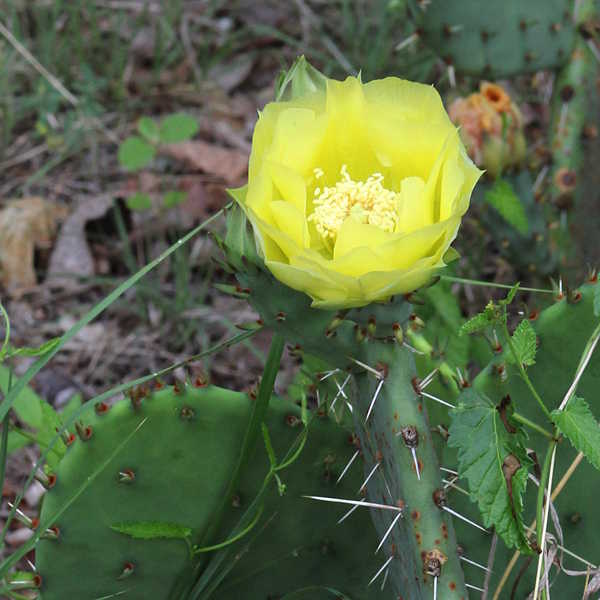
The pads produce white to gray, brownish, or reddish spines in clusters of 1 to 10 spines ranging in length from 1-3 inches. In addition, the base of each spine cluster is ringed by numerous hair spines or glochids. It is bad enough to get the longer spines stuck into your feet or hands but the hair spines are an additional insult that requires much more attention to detail to get them all removed.
Opuntia produce new pads along the edges of previous year’s pads so they appear as a cluster of pads that spread out along the ground from original plant. Prickly pear pads in contact with the grounda will form roots. Like cholla cactus, the pads of the prickly pear can form a new plant if they are removed from the parent plant by animal activity and are left in contact with the ground.
Prickly pear are named for their cylidrical fruit that are covered with hair spines or glochidia. The flowers of Opuntia generally can be seen in yellow, yellow and red, or a dull reddish pink color.

Ripe fruits are generally cherry red in color but they can be pink or pale green.

Some folks collect these and remove the glochidia before making them into jams or jellies. The young pads of Opuntia are also edible and are the nopalito seen in some grocery stores these days. All parts of the pads can have hair spines and care must be taken to remove these before consumption.
Leave a Reply