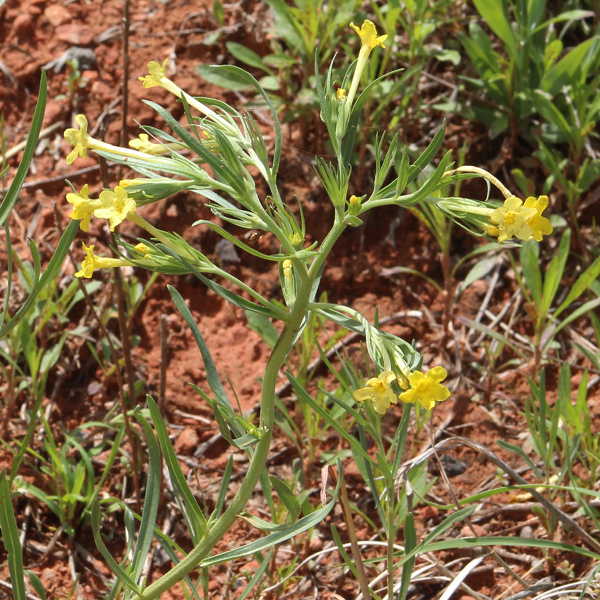
On a photo safari in the spring of 2019, I had the opportunity to see a close relative of the Fringed Puccoon. Lithospermum caroliniense, the Carolina Puccoon is found growing in sandy soils of grassland or open woodland in many parts of Texas. You can learn more about them, here and here.
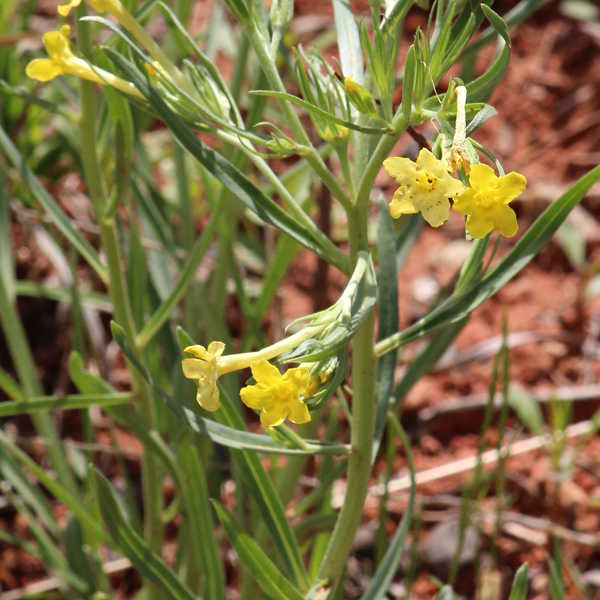
Anytime I see a narrow leaved wildflower with yellow tubular flowers, I tend to think of the Fringed Puccoon. The plant pictured here had the fuzzy, narrow, stalkless leaves like the Fringed Puccoon but the fringes of the five flower petals and the length of the tubular flowers were wrong for that species. Lots of things can account for flower malformations like poor growing conditions, insect damage, and genetic mutation. This time it was the delight of seeing a species unknown to me. (This is akin to the elation you feel when you hunted and found easter eggs. At my age, I am continually reminded that I haven’t seen it all, just barely scratched the surface. Hurray!)
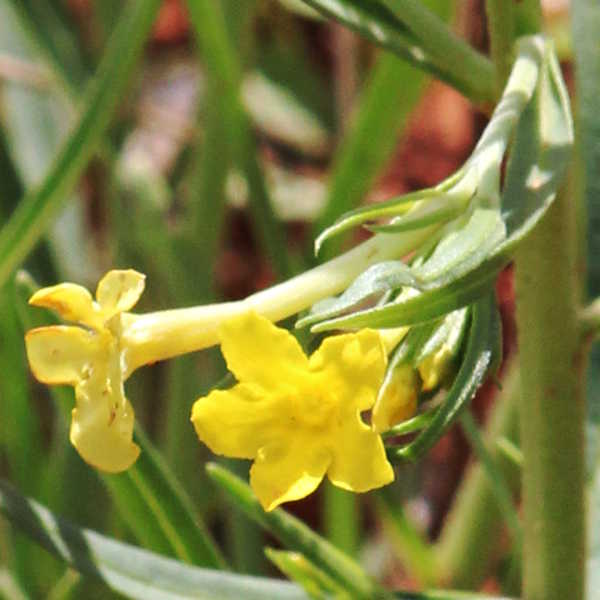
Here you can see the fuzzy surfaces of the sepals and the leaves as well as the long tube of a flower past its prime. Close inspection will also reveal unopened flower buds which means that these guys flower progressively which prolongs the beauty of the plant during the spring.
The puccoons belong to the forget-me-not family (Boraginaceae) and their genus name means stone seed. If you visit inaturalist.org, you can see many good pictures of the Carolina Puccoon. Beauty is where you find it, get out and look, you’ll be surprised what you find.
Leave a Reply