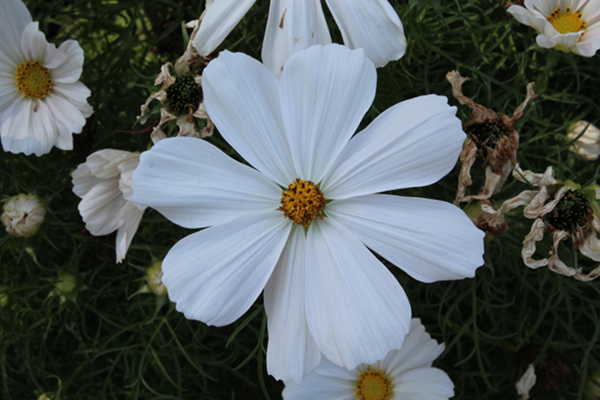
On a recent trip to Fort Collins, Colorado, my wife and I visited the University of Colorado’s Trial Gardens. We photographed these members of the incredible Daisy family during our walk through these beautiful gardens.
This first image shows Cosmos ‘Sonnata White’. The Cosmos genus has over 36 species, and is native to Mexico, the southern US, and Central and South America. Cosmos bipinnatus been a favorite of plant breeders for many years. Cosmos reminds me of a wildflower common throughout Texas and elsewhere called Thelasperma filifolium, Greenthread. As it turns out, Cosmos and Thelasperma are in the tribe Corepsideae within the Daisy family Asteraceae.

Here is a beautiful variety of Cosmos bipinnatus called ‘Apollo Pink’ produced by PanAmerican Seed.
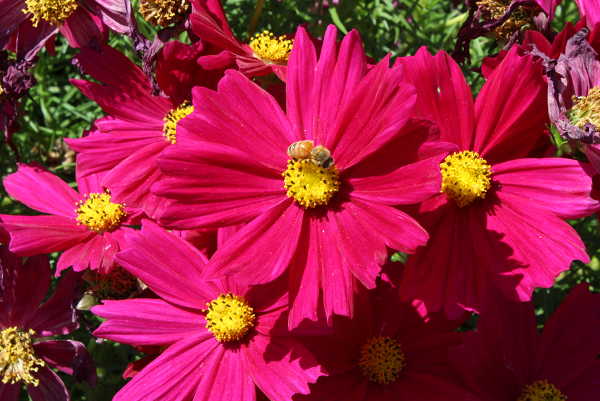
This variety is called ‘Apollo Carmine’. As you can see, the plants are pretty much the same except for flower petal color. The handiwork of plant breeders produces many colorful choices for our gardens! Did you CDB (see the bee)?
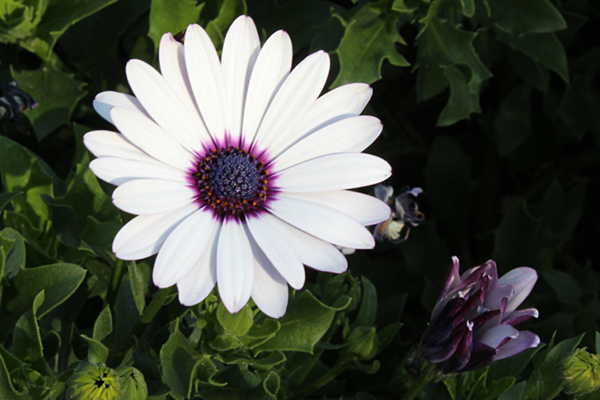
Here is a single bloom of Osteospermum ‘Sunny Atilla’ produced by Beekenkamp in the Netherlands. Osteospermum, native to Africa and the Arabian Peninsula, has about 50 species; but, most of the hybrids sold as garden plants in the US are hybrids between O. jucundum, O. ecklonis, and O. grandiflora. Beekenkamp plant breeders used O.ecklonis to produce what you see here.
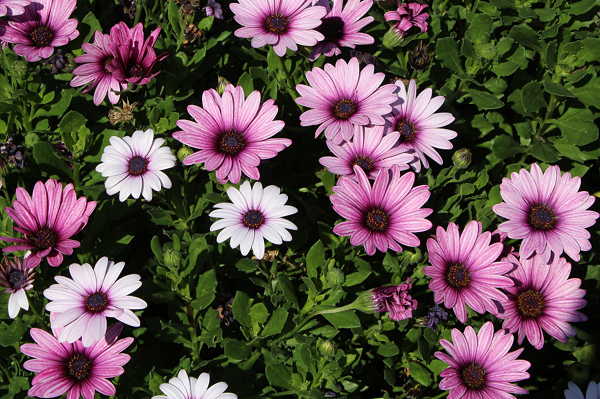
Here you see ‘Sunny Atilla’ displaying its full range of colors, from nearly white to milky lavender. I love the range of colors in this variety. A symphony of genetics!
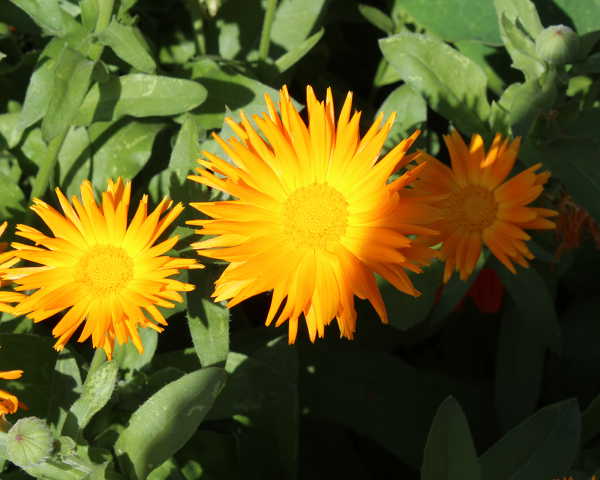
Pictured here is a close cousin of Osteospermum, called Calendula ‘Radio’. The Calendula genus has 15 or more species and is native to the parts of Europe and Asia surrounding the Mediterranean. Calendula officinalis is the species commonly cultivated. I like the yellow-orange of the petals of this variety. Read more about the Pot Marigold here and here.
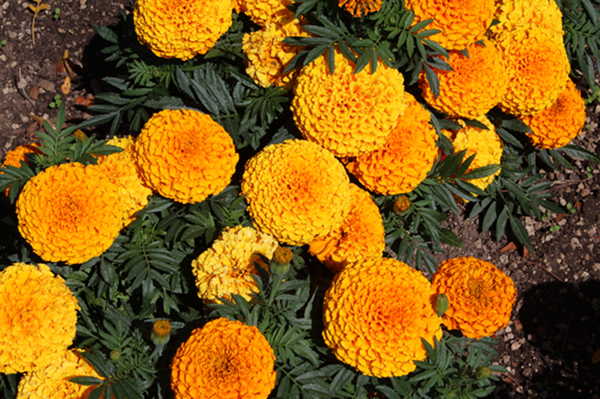
The final image is of the Taishan Orange F1 variety of an “African” Marigold called Tagetes erecta produced by PanAmerican Seed. This species is really a native of Mexico which points out why scientific names are needed to eliminate the questions raised by common or commercial names assigned to a species. This variety was used to decorate landscapes in the 2008 Bejing Olympics. I love their huge, globular flower heads and their rich gold color, beautiful.
Leave a Reply