
Our front porch has a roof and a southern exposure near two mature pecan trees. Barn swallows like this location for nesting and will rebuild their nest in this same location year after year.
This is a photo of a recently hatched barn swallow, Hirundo rustica. They are pretty much naked except for bits of grey downy feathers. Since this is such a hot location in early June, I suspect having fewer feathers helps them stay cooler than they would otherwise.

Here you see this little guy squawking at me for scaring mom off the nest to take his picture. Their parents would sit in the nearby pecan trees and fuss at me while I was taking pictures of their little ones.
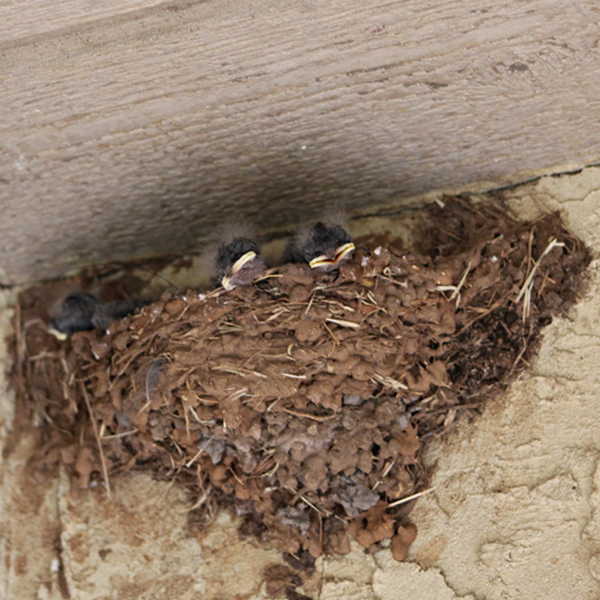
This photo shows three babies in the nest about 4 days after the previous photo. The nest is typical of the nests barn swallows make by scooping up mud and mixing it with bits of grass to build a conical platform up near the eave of the porch roof. I wonder if these birds are responsible for the invention of adobe construction materials? Maybe somebody in the past observed the swallow’s technique and decided to scale it up to people size structures. Hmmmm.
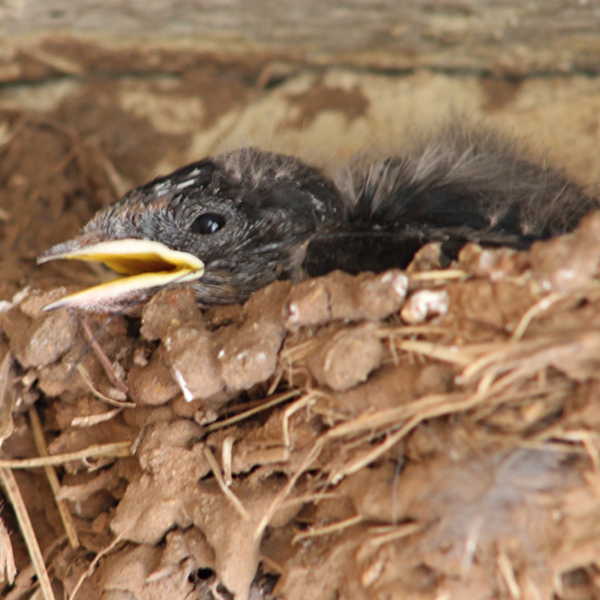
Here is one of the nestlings who is nearly through replacing his downy feathers with flight feathers. Notice how big the mouth is on this youngster. These birds make their living by flying around and catching insects in their big mouths. They eat flies, mosquitos, bees, wasps, butterflies, and beetles. They are beneficial to man because they help eat those bugs that we don’t like, or that compete with us for our food crops, or spread disease. Barn swallows get their name from their tendency to build nests in barns and other man-made structures. They belong to the same family (Hirundinidae) as the cliff and cave swallows, and the purple martins.
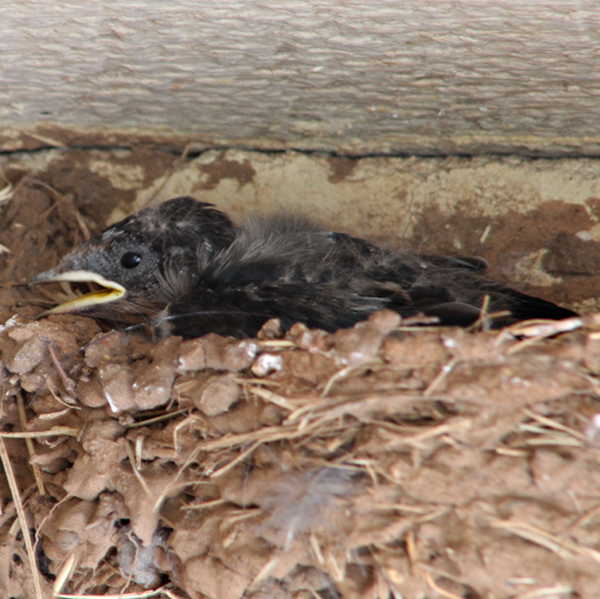
In this last picture, you can see that this little guy is just about ready to leave the nest. In fact, when I returned about 5 days later all I found was an empty nest. My luck with being able to photograph these guys and the robins the month before was poor. Such is the way of wildlife photography. Unless you spend every waking hour with the nest, you are liable to miss something important.
Leave a Reply