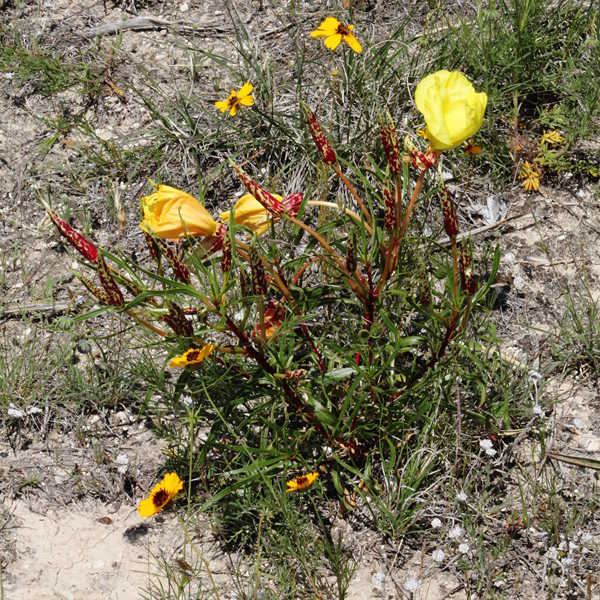
When I first learned the name of this species, it was called the Missouri Evening Primrose, Oenotherea missouriensis. In the intervening 40 years, this plant has been reclassified to Oenothera macrocarpa and renamed Big Fruit Evening Primrose. Some refer to it as the Ozark Sundrop which I think is a prettier name than the other two choices. In the above image, you can see a typical example of the species in a limestone soil and grassy habitat. Also you can see some Greenthread flowers (Thelesperma filifolium) intermixed. Big Fruit Evening Primrose flowers can attain 4-5 inches diameters.

In the second image, you can see a partially open flower and part of an older flower that has begun to wilt. Note the difference in petal color. These flowers open for two consecutive nights and the intervening day as they are pollinated by Hawk Moths.(Moody-Weis and Heywood 2001)
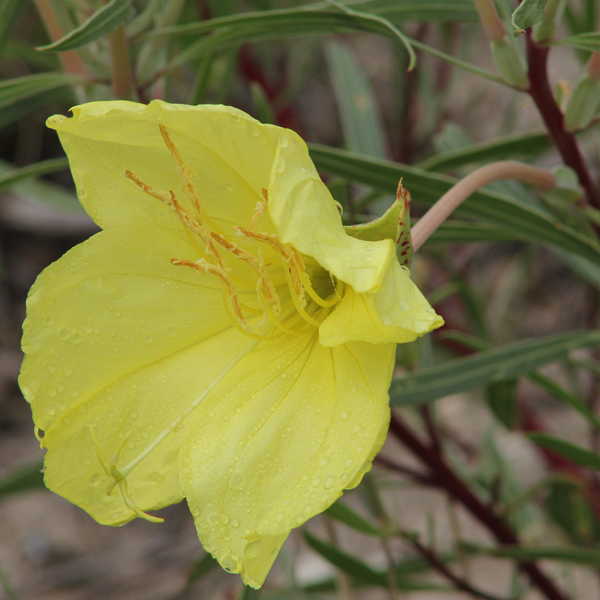
In the third image, you can see a fully open flower. These are 4 to 5 inches in diameter and have a beautiful, butter yellow color. Notice the differences in length between the style of the pistil and the anthers. This helps to prevent self-fertilization. I used to think these flowers always had spiders leaving webs all over their anthers but Moody-Weis and Heywood, 2001 pointed out that this is a characteristic of these plants.
Besides their large flowers, one of the ways I tell these plants apart from the other primroses in Texas is O. macrocarpa’s sepals get red spots on them and the other species do not. These plants can make beautiful additions to locations in your native plant garden that receive full sun, subsist on local rainfall, and have limestone rich soil. They also feed numerous insects and especially native bees.
Leave a Reply