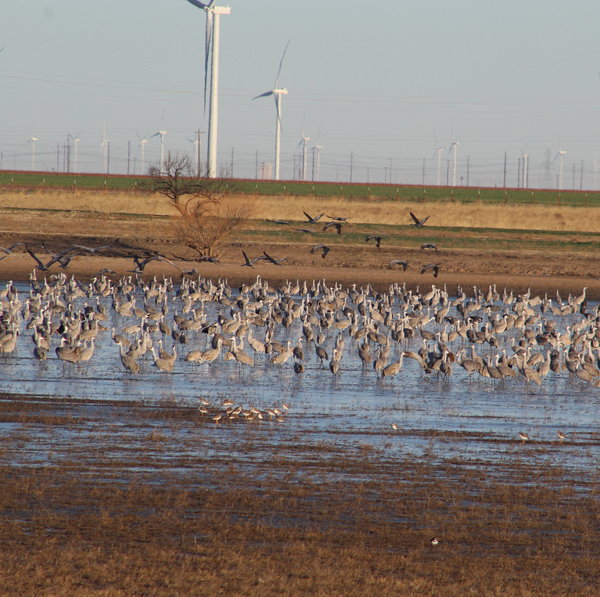
On 3-2-2017, I experienced a real treat. I was able to approach a large collection of Sandhill Cranes that were roosting in the bottom of a drying playa not too far from where I live.
Sandhill Cranes, Antigone canadensis belong to the Gruidae or crane family. They are found in Texas during the winter and migrate to breeding grounds all over Canada and parts of Alaska. They also occur in China, Japan, Korea, and the Russian Federation. They prefer wetland habitats in these areas where they consume grains and various insects and other invertebrates.
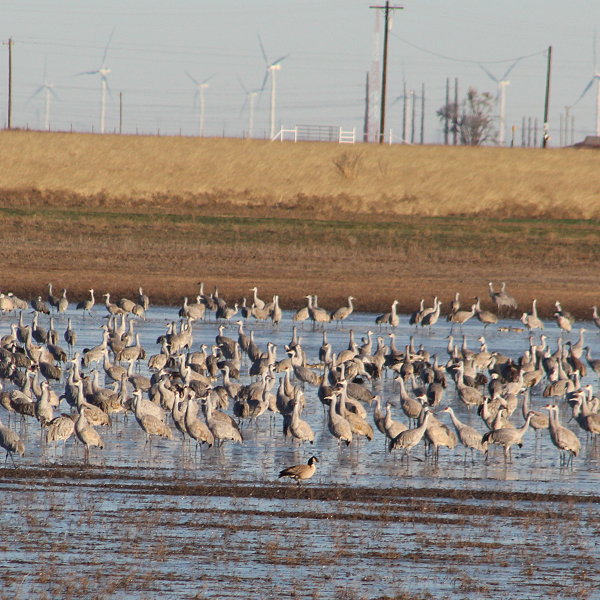
In the second picture, you can see a Canadian Goose in the foreground which should give you an idea how large these birds are. They prefer to roost in standing water at night for protection against predators. This playa is one of the few in my area that still have water. It has been a drier fall and winter than last year and most of the playas have dried out.
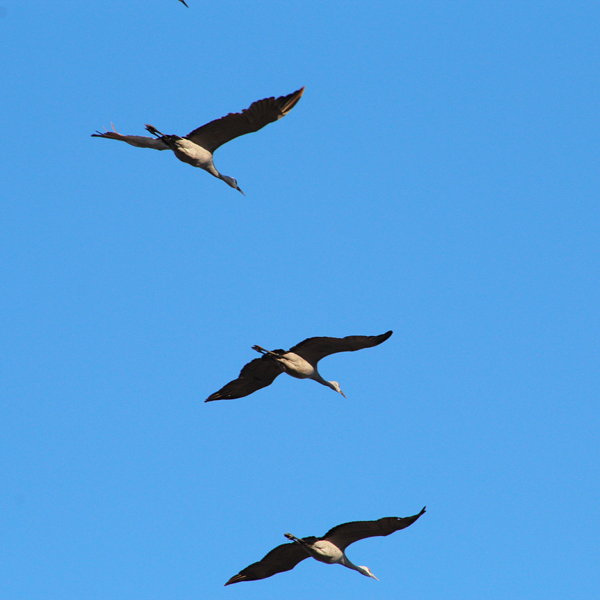
In the third picture, shows a small flock of Sandhills in flight. They fly with their necks straight which distinguishes them from Great Blue Herons who fly with their long necks bent into a U shape. Sandhills are slate gray birds for the most part but there are individuals whose underparts can be tinged with a rusty color. If you are lucky enough to see them up close, they have a featherless, red forehead. This character, their size, and the way they hold their neck in flight will distinguish these birds from all others.
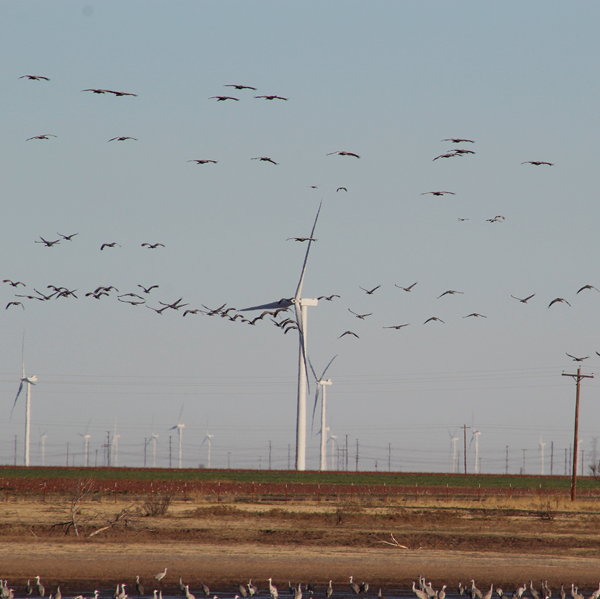
In the last photo, you can see several flocks in flight in the vicinity of Wind Turbine generators. Cranes and other migratory birds have no problems navigating around these devices.
Sandhill Cranes fly very high during migration. Their calls can be heard as they fly over. Until I took these pictures, that was about as close as I was able to get to these beautiful birds. The large flocks flying over with their faintly audible krrruuuuk krrrruuuk was a sure sign that winter is coming to an end.
I learned during my photo session with this large collection of sandhills that they make a lot of sound as they “visit” on their layover. It’s a sound I will remember for the rest of my life.
Leave a Reply